

System Shift Series: AdvanTex I/A System Addresses Nitrogen in Wastewater
Published on: October 19, 2026
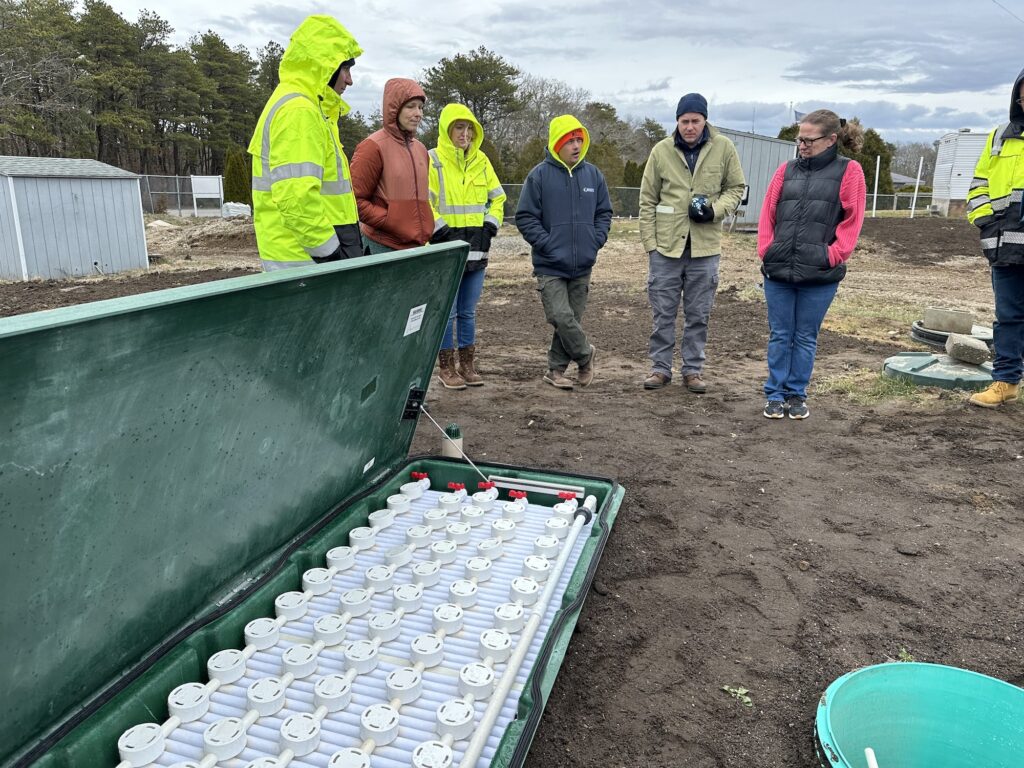
System Shift is a story series focusing on Cape and Islands homeowners who have I/A systems and/or are practicing alternative ways of dealing with human waste. The series also puts a spotlight on pioneers in the world of advanced treatment. What’s it like to have an I/A system? How does it help the local mission to be better land and water stewards? We’ll tackle these questions and more in hopes of helping “shift” the way we see all the moving pieces of Cape Cod’s wastewater puzzle.
By Amy DuFault, MASSTC Communications
Sometimes, the most important environmental innovations are the ones we rarely see. They’re underground, tucked beneath a property, or quietly doing their job while we go about our daily lives. As homeowners, we want wastewater treatment to be convenient and functional, taking care of business while we manage our homes, children, work, and everything else on our plates. Few of us have time to consider what happens after we flush.
Wastewater treatment may not be the first thing that comes to mind when we talk about protecting our local waters. But here on Cape Cod, it’s become an increasingly important part of the conversation and another responsibility competing for our limited time and attention. Fortunately, some remarkable advanced treatment companies are pushing technology forward to help do the dirty work.
Founded in Oregon in 1981, Orenco was established to address a problem that remains relevant today on Cape Cod and beyond: failing onsite wastewater systems and the need for sustainable, cost-effective alternatives. I spoke with Jim Healy, Eastern Regional Sales Manager at Orenco Water, about the growth of AdvanTex, the changing demands of wastewater treatment on Cape Cod, and how Orenco is preparing for the next generation of onsite wastewater technology. We also discussed how growing concerns about nitrogen pollution in Massachusetts are prompting communities to seek new ways to protect their waterways and bringing more inquiries to the company.
“AdvanTex, which has been around for 25 years now, has enjoyed steady growth in various markets throughout the US and around the world since its inception,” Healy explains. “Here in Massachusetts, that growth has been slow and steady as well, with a bump in the last couple years due to our BANRT General Approval designation,” he says.
Cape Cod’s wastewater challenges are closely connected to the health of its coastal ponds, estuaries, and bays. Excess nitrogen can contribute to declining water quality, and communities are increasingly exploring advanced treatment options to help meet environmental goals.
“Our core business in Massachusetts has been on the Cape and mainly driven by nitrogen reduction regulations,” Healy says. “With the new regulations taking effect in the past couple of years, we have seen increased demand in Mid-Cape communities and around Buzzards Bay.”
How does the technology work? Healy points to its reliability and track record as important advantages in a market where treatment performance is critical.
“It’s no mystery that the only two technologies currently enjoying this classification are recirculating packed bed filter designs, as that approach is robust, predictable, and tested over time,” he says, referring to the technologies recognized under the state’s BANRT General Approval program. As Massachusetts communities look for ways to reduce nitrogen pollution, that established performance has become an important part of the conversation.
Who Is Buying I/A Systems?
When we think about who buys a wastewater treatment system, it’s easy to picture a homeowner replacing a failing septic system or complying with a new local requirement. In Massachusetts, however, the process often starts well before a homeowner chooses a particular product.
“Our core ‘customer base’ is the engineering community,” Healy explains, noting that systems in Massachusetts must be designed by a registered engineer or sanitarian. These professionals are central to the process. They evaluate site conditions, interpret regulatory requirements, and help determine which treatment approach is appropriate for a property.
“Since AdvanTex is a system made up of various components assembled in the field, we count on certified dealers whose job it is to track and oversee all installations as well as service providers to ensure our products are being installed and serviced properly,” Healy says.
The system must also be designed for the property, installed correctly, and supported over time. As demand grows across Cape Cod and the rest of the Commonwealth, that network of engineers, dealers, and service providers becomes even more important.
“We’re constantly refining our approach, so we maintain our standing in the market and take advantage of growth opportunities as they arise both on the Cape and rest of the Commonwealth,” he adds.
It’s one of the less visible aspects of wastewater innovation, but an essential one. A system’s long-term success depends not only on what it can do, but also on how well it performs in the real world. For now, most of the inquiries Orenco receives in Massachusetts involve nitrogen reduction, though phosphorus is beginning to enter the conversation. Residential treatment solutions for phosphorus, however, are still developing.
“To date most of the inquiries we receive involve nitrogen reduction,” Healy says. “Phosphorus reduction in residential applications is a relatively new phenomenon and solutions available are in the early stages of development.”
For communities working to protect sensitive water bodies, these distinctions matter. Different pollutants require different treatment approaches, and the industry will need to continue developing solutions as environmental priorities evolve. Healy raises another point worth considering: homeowners rarely install an innovative or alternative wastewater treatment system simply because they want to. Often, a regulation or a failing system is what brings them to the table.
As Healy explains, “as an industry the onus is on us to provide solutions that are cost effective, work as advertised, and don’t require onerous operation and maintenance protocols.”
For Cape Cod homeowners, municipalities, and the professionals who support them, the goal is to balance environmental protection with everyday practicality. And as nitrogen reduction continues to drive demand, phosphorus will likely bring another round of questions about treatment performance, cost, and long-term maintenance.
What’s Next?
When I asked Healy what customers can expect over the next few years, his answer came down to a few straightforward goals.
“In a nutshell, more cost-effective, reliable, easier to install and maintain systems designed around ever-changing and more stringent regulations with an eye towards protecting the environment we live in,” he says, adding that nitrogen reduction will remain a major focus, with phosphorus representing the next challenge.
“Our commercial/municipal division currently has industry leading solutions for systems ranging from a few hundred gallons per day up to over 100,000,” Healy says, adding that collection options can help reduce capital costs and create opportunities in areas where conventional sewer systems aren’t feasible.
These systems are particularly relevant as communities seek to improve wastewater treatment without taking on the expense of building traditional sewer networks.
Properly designed onsite and decentralized systems can offer alternatives, provided they meet treatment requirements and can be supported over the long term. For smaller communities and locations where conventional sewers are impractical, these approaches may offer greater flexibility in planning future wastewater infrastructure.
Nitrogen reduction is prompting communities to consider new approaches, while engineers, installers, manufacturers, and regulators work to determine which solutions will deliver lasting results. Companies like Orenco are part of that transition, building on established technologies while adapting to new expectations and tools.
The next chapter will involve more than developing another treatment system. It will mean finding ways to make advanced treatment more affordable, easier to maintain, and better suited to the communities that need it.
Because at the end of the day, wastewater innovation isn’t just about what’s happening underground. It’s about what we’re trying to protect above it. And here on Cape Cod, that’s a conversation worth having.
Legal Disclaimer:
EIN Presswire provides this news content "as is" without warranty of any kind. We do not accept any responsibility or liability for the accuracy, content, images, videos, licenses, completeness, legality, or reliability of the information contained in this article. If you have any complaints or copyright issues related to this article, kindly contact the author above.
